
Shoe size is a number printed on a box, while fit is what the foot does inside the shoe. This page keeps the two apart and checks each against a named publisher.
Two feet, two sizes
APMA gives a rule for uneven feet: if feet differ in size, always buy with the larger foot in mind.
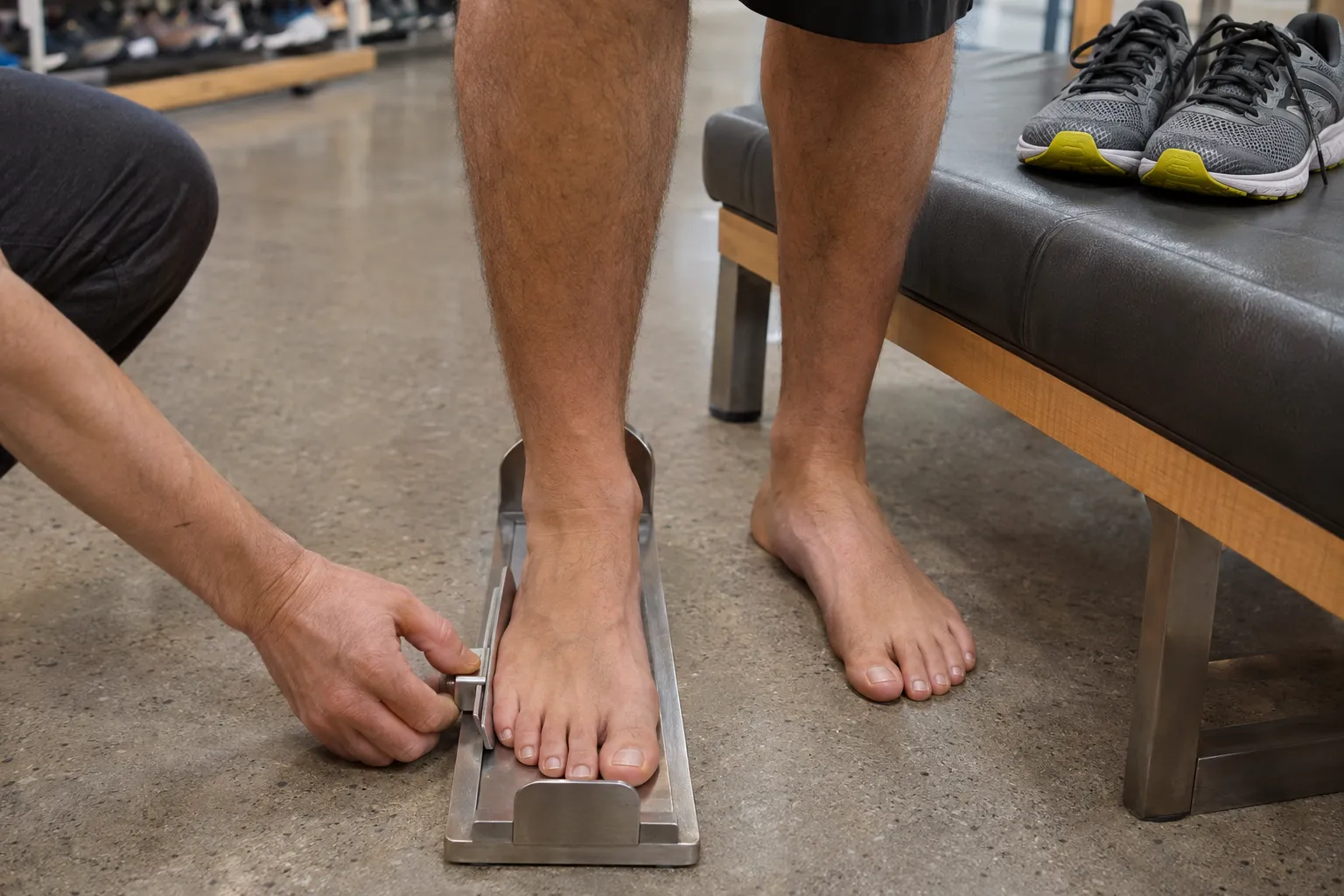
That rule hands the decision to the larger foot, so measure both feet and size to the bigger one instead of trusting a single reading.
The yearly measurement
AAOS OrthoInfo adds a rule about time: feet can grow as we age, so have your feet measured every year.
A size that was right once is a record, not a guarantee. Note the date of each measurement so next year's has something to be compared against. Anyone planning to wear an insert should read the Cleveland Clinic orthotics guide first, because an insert is an extra item that has to fit inside the shoe.
Shoes for sport
Running and court shoes get their own advice. APMA keeps a page on choosing shoes for sports, and it is the better stop for anyone whose sore heel shows up after a run.
A different heel complaint to rule out by reading
Not every sore heel is a fit problem. Kent Community Health NHS Foundation Trust publishes a leaflet on mid-substance Achilles tendinopathy, and reading it shows how a different diagnosis is worded.
What to do before buying
Measure both feet, size to the larger one, and write the date on the receipt or in a note. Bring the measurements and the shoes you currently wear to any heel pain exam, since both are things a clinician can look at.