
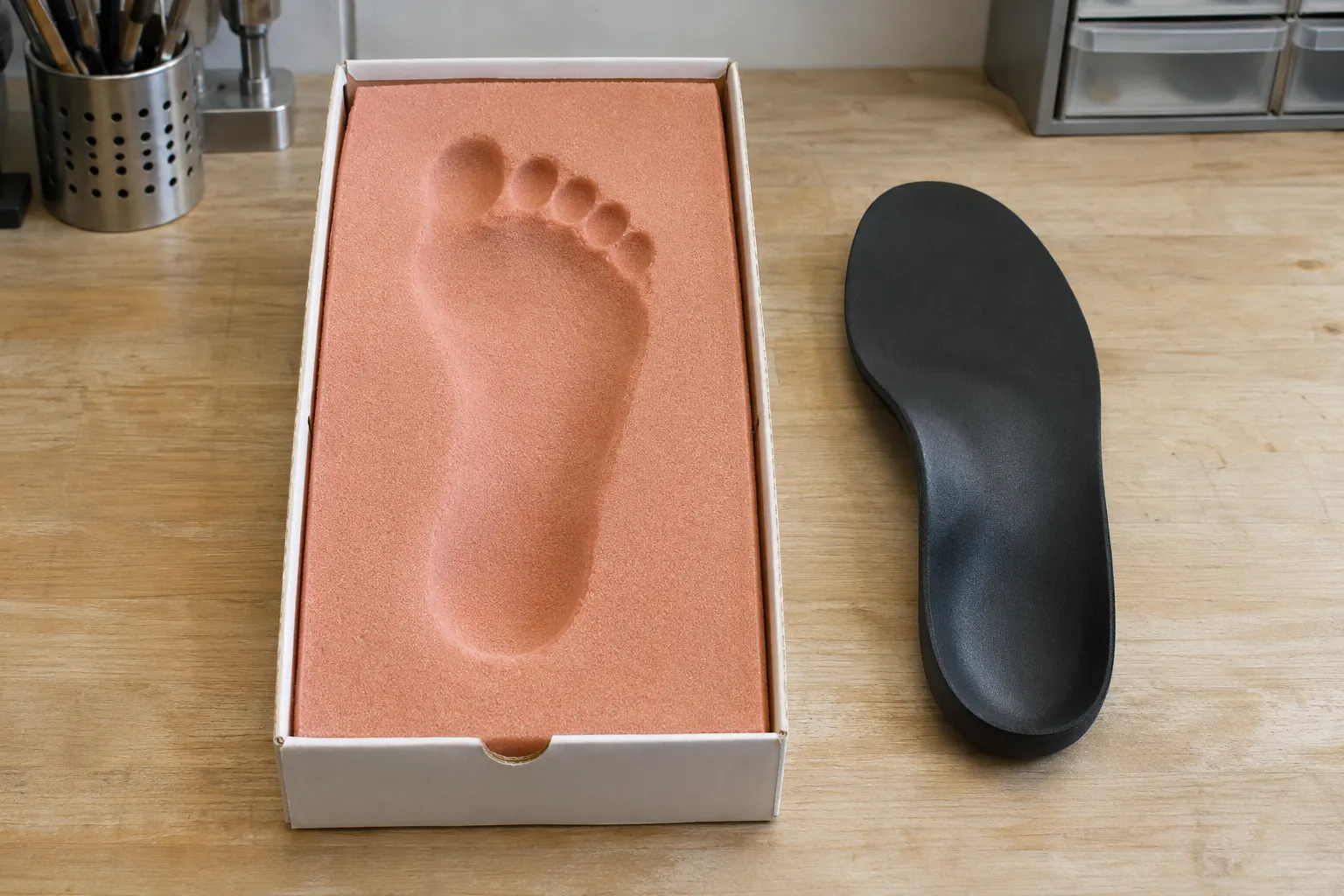
A custom orthotic starts with some record of the foot and ends as something worn inside a shoe. This page sets out the questions worth asking between those two points and the named sources that frame them.
The stated aim
Kent Community Health NHS Foundation Trust states the aim plainly: orthotics aim to correct the biomechanics of the foot and ankle. The trust's leaflet on mid-substance Achilles tendinopathy is where that wording appears.
An aim is a promise about intent, not a measured result. A reader comparing two quotes for a custom device can hold both to the same sentence and ask what each one is meant to change.
Questions to ask at the fitting
- What is this device meant to change about how the foot works?
- How will that change be checked once the device is in use?
- Which shoes is it designed to go into?
The shoe it has to fit
A device lives inside a shoe, so the shoe belongs in the conversation. APMA keeps a page on choosing shoes for sports that a reader can bring along when the plan is a running shoe.
Reading a device description
Descriptions of orthotics differ in what they stress. The Cleveland Clinic orthotics guide lists definition, risks, benefits, types and tips in its own title, which gives a reader five headings to match against any sales page.
The quote and the receipt
Orthotics sit among the first rungs in this guide's order, ahead of procedures. Write the three questions above on the back of the quote, and keep the answers with the receipt.